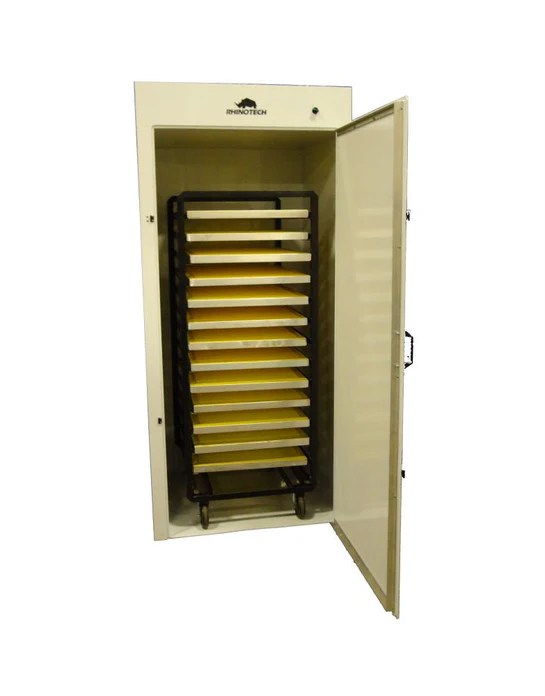
Check out the RhinoTech screen drying cabinet. It holds an impressive 25 screens.
A single pass airflow system. Fresh air is brought in through a filtered fresh-air intake.
The air then passes through a separate heating chamber that is thermostatically controlled. The system perfectly eliminates the recycling of wet warm air into or through the drying cabinet.
A shut-off air switch turns off the heating element automatically in case of airflow loss.
The temperature of the air is adjustable, and the temperature sensor is in the screen holding area for accurate control.
After the air is heated, it passes one time evenly over each screen, picking up the moisture with the air movement. It is then exhausted out of the cabinet.
A specially designed exhaust port prevents dust from entering the cabinet.
Contact Jonathan at 480-899-9089 or email me through my ecommerce site:
The best infrared belt ovens for screenprinting are the basis of my offerings. I only offer equipment that has an excellent build, high end performance, efficiency, dependability, and even decent aesthetics. How the build looks can give an impression to a potential buyer about the quality of the machine.
With the dryers I offer, the lead time is among the shortest currently, and the pricing is competitive. I also only sell screen printing conveyor dryers with impressive tech support and availability of parts. All my infrared curing ovens are exceptional in all ways and they come with the factory warranty and the coverage from Catspit. Look at my gas dryers too. My name and reputation are my way of making a living. I never let a customer leave unhappy with their purchase. Never. Catspit will supersede the factory warranty in many cases where the machine does not meet my expectations. That means often Catspit will cover you beyond the manufacturers warranty.
Check out what I have to offer and give me a call or send an email if you have any questions I can help with. Google may show incorrect pricing so be sure to visit my ecommerce site for the correct details and call me if you need pricing for anything. I am happy to help.
Screen printing tee shirts is one of those businesses that everyone seems to think they can make money at. If I had a dollar for every time I heard someone say: “I have a great idea for a tee shirt!” I would not be writing this article right now.
I don’t mean to be insensitive or sound like some pretentious know it all. It is just the fact of the matter. And we all know very well that many successful screen printing shops have started in someone’s garage but many screen printing businesses also have failed in someone’s garage. I suppose it really comes down to people’s preconceived ideas and beliefs in regard to screen printing. To many, it seems like an excellent business to start if you have very little or no money at all. Now we all know that isn’t the case. That doesn’t mean it can’t be done, because it has. It means that sometimes it takes more than good business and sales skills to be successful. Many screen print shops fail due to inferior quality work or the inability to produce product by set deadlines.
Another very important reason people are interested in printing tee shirts for profit is all around us. Tee shirts are everywhere. The next time you are out at the local mall or supermarket take a look around you. Chances are that a majority of the people you will see are wearing some type of printed garment. So there is a false impression that it is easy to produce and market a brand of logo wear. Just like it is sometimes faulty print work that can sabotage a screen printing business, so too can jumping into a branding project without doing your marketing research and making sure you have the capital to push the product line. Many brands of logo wear are successful and very profitable only because of the marketing behind the product.
It is important to understand that it takes a balance of printing skills, business skills and marketing that will ultimately determine the level of your success. It may be obvious at this point that having money to invest into the business at the time of startup will be of the greatest help. It is true that it takes money to make money when it comes to manufacturing a product for consumer use. If you have the right tools to do the job and the right tools to promote your business then most anyone can build a profitable screen printing shop.
It is the nature of the printed garment industry that there always seems to be room for one more printer. That may be another factor in the popularity of starting a screen printing business. Try to Google screen printers in your local area. I would bet there is a pretty good amount that will show up in the search results. And let’s not even mention all the Google ads you will see for online screen printing services. Today’s printed garment market is more competitive than ever with the introduction of online printing services.
The custom printed garment industry is basically a cut throat business. There will always be someone who is willing to print for less than you. In any economic state the screen printing business is such that there will always be a lot of talk. A lot of inquiries and price quotes with few that actually go anywhere. You will give price quotes on jobs only to be told later that, “although your pricing is very competitive, we have found the product for less with another printer”. This is normal.
So be forewarned moms and dads, brothers, sisters and strangers alike. Screen printing for profit is much more than a hobby or a home project. It is an endeavor that requires dedication and determination.
Many people get the notion that they can start a printed tee shirt business using only a heat press with computer printed heat transfers. This is a common question I get asked on my website and I finally decided to address this topic with a closer look. There are ways of making money with heat transfer processes. It is just a matter of either finding your niche or using the right transfer process.
It is very risky and difficult to start a garment business with computer generated heat transfers. They are just not capable of producing the high quality results that demanding consumers are looking for. The computer printed, heat transfer style garment is best suited for novelty and point of sale situations. In these instances the customer is willing to settle for less of a product for the convenience of immediate satisfaction and/or memorabilia.
And in that very sector the direct to garment digital printer is becoming the latest standard with cutting edge technology that allows the computer to print the image directly onto the garment. Referred to as DTG or Direct To Garment Printing, this process is advancing fast and is capable of printing dark colored garments as well as the light colored shirts that ordinary computer printed heat transfers are limited to.
You may be able to find certain niches with computer printed heat transfers in which you can actually make some decent money. Some people do sublimation mugs and make a great side income for themselves. Your product line may include but is not limited to tiles, “dog tags”, license plates, ceramic mugs, light switch covers, clipboards, hardboard tiles, tote bags, plaques, neckties, travel mugs, ornaments, pet tags, business card holders, name badges, coasters, and clocks and of course mouse pads.
For tee shirts the easiest way to achieve the best results with the least expense and without having to screen print yourself is to have plastisol transfers printed of the designs you wish to sell. All you have to do is stock the plastisol transfers and the blank shirts. Then press them as you get orders. You will be able to do whites, blacks or any color garment as well as most any style of garment. You can even have them made for baseball caps if you have a cap heat press. The plastisol heat transfer is the next best thing to screen printing without all of the costs and labor. I know of no other heat transfer process which can achieve the same results as screen printing except for plastisol heat transfers.
Today you might also use direct to film heat transfers which offer a much more dynamic application solution for complicated multi colored designs and lower quantity orders. Now it is possible to buy a heat press and place it in your spare bedroom or dinning room so you may heat press garments. All you need to do is preorder the DTF transfers and then heat press them yourself. Obviously, this can cause some issues such as production time limitations. You will need to plan your jobs well and account for the time it will take to heat press each garment, one by one.
The first drawback to heat pressing shirts is that you must have your designs printed and stocked ahead of time. You would also have to stock all the various garments you wish to offer. Then you can press the plastisol heat transfers or DTF with a standard heat press at the time of sale. It is a great solution for point of sale type scenarios. But I think this option is the best and least expensive method of breaking into the printed apparel industry without the risk of ruining your name and reputation using inferior computer generated heat transfers. Digital transfers have too many limitations as opposed to DTG, plastisol transfers, or DTF.
But with any heat transfer process or even DTG, each shirt takes more time to “print” than if we were direct screen printing on an automatic textile press. For example, a 24 shirt order is easy enough to heat press and will not take too much time. But let us jump up to 100 or 500 pieces. Then you will spend more time heat pressing each shirt than you did on any other part of the process. Time is money and printing tee shirts can be like printing money but you need to print as fast as possible to gain the highest profit margin. On that note, it is best to buy your DTF transfers instead of trying to buy a DTF machine. Maybe one day your work load will warrant such an investment. Just be aware of slick salesmen and financing companies.
It is always best to do your research. Do not let start up heat transfer business companies persuade you into a process that they will promise you it can do what screen printing can do. Sadly, that is just most often not the case. There is a lot of good information on the internet about heat transfers, but there is also a lot of bad information. Just take the time to learn all about your options when considering starting a custom printed garment business.
The truth is, if you are serious about building a screen printing business which provides custom printed apparel, you will end up using different embellishing methods for different jobs. Every screen print shop should have at least one heat press with multiple transfer processes available for your customers. Diversity and having the right tools for the job will help you satisfy your customers and keep tham coming back for many years to come.
I am happy to announce that Ranar is mostly back online. As usual, I offer the complete line of Ranar equipment. Lead times are excellent at 4 to 6 weeks for many products. Lead times on larger dryers are longer but still much better than other manufacturers. Pricing is also excellent just as it always has been. The build is now upgraded with finer attention to details and aesthetics.
Check out all the Ranar equipment I have available on my ecommerce site. Flash cure units, exposure units, bench presses, belt dryers, floor presses, and more. Most of the product line is back and ready for orders. Certain items may be unavailable currently. Those limited items will be coming back into production very soon.
Please call or email for pricing and availability as I continue to update the website. I am always here to answer your questions.
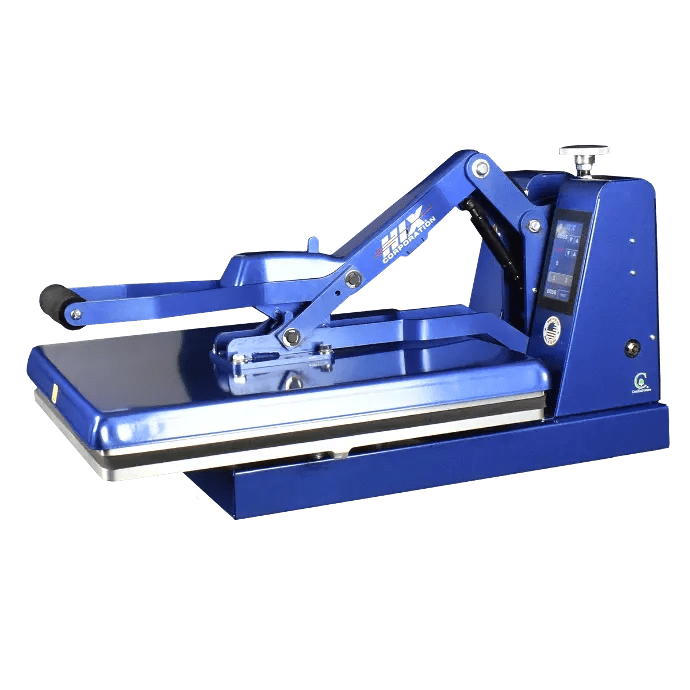
Just a quicky tutorial video showing the screen set up for a simple 1 color screen print. I use a rear clamp press and discuss the biggest advantage it has. The press featured in this demonstration is the Hix Premier bench top version.
This is a very cool remix of some simple factory video clips. Here we use an air dry enamel ink to screen print control panels for #Ranar infrared flash cure units. It’s a short version of the original educational video on YouTube. It demonstrates how you can print almost any type of flat substrate on a textile printing press.
Just a short look at a test print using white polyester plastisol ink. Sometimes we need to use a “poly” ink when we screenprint garments with any dark colored polyester fabrics. A problem called dye migration can occur up to 72 hours after printing poly textiles. Want to learn more? Watch this detailed video:
Just a quicky tutorial video showing the screen set up for a simple 1 color screen print. I use a rear clamp press and discuss the biggest advantage it has. The press featured in this demonstration is the Hix Premier bench top version. You can see the complete video here:
Here is an abridged version of my video about how to back flood when screen printing water-based inks. This is a simple method of keeping the air-drying ink from clogging the screen. Even still, it is a fundamental skill to learn. If you like thorough explanations, watch the entire tutorial here:


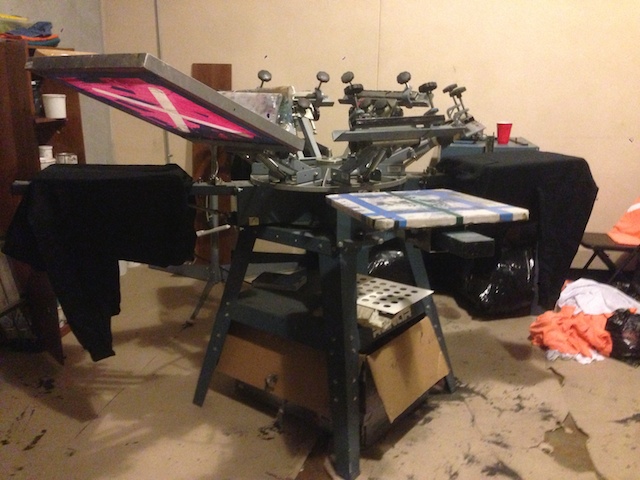

 Learn How To Screen Print Tee Shirts At Home